If you’re not at the table, you’re probably on the menu.
We talk a lot about power in community organising. This can make some people uncomfortable, and we often get challenged with the age old quote that ‘power corrupts’. And sure, power can corrupt. But what about powerlessness?
Here at NCCO we see powerlessness as the most corrupting force in our society today. Powerlessness is leading to a breakdown of trust in each other, our communities, and our politics.
What’s even more alarming for us, is that it seems that civil society is struggling to find an effective response to this. It is bogged down by budget cuts, shrinking membership and a professionalised staff body who have forgotten the methods that civil society once used to build the proudest part of our society.
That is why we here at NCCO has made it our mission to make sure that Nordic civil society leaders learn again the key tools and habits that enable them to build collective power with others.
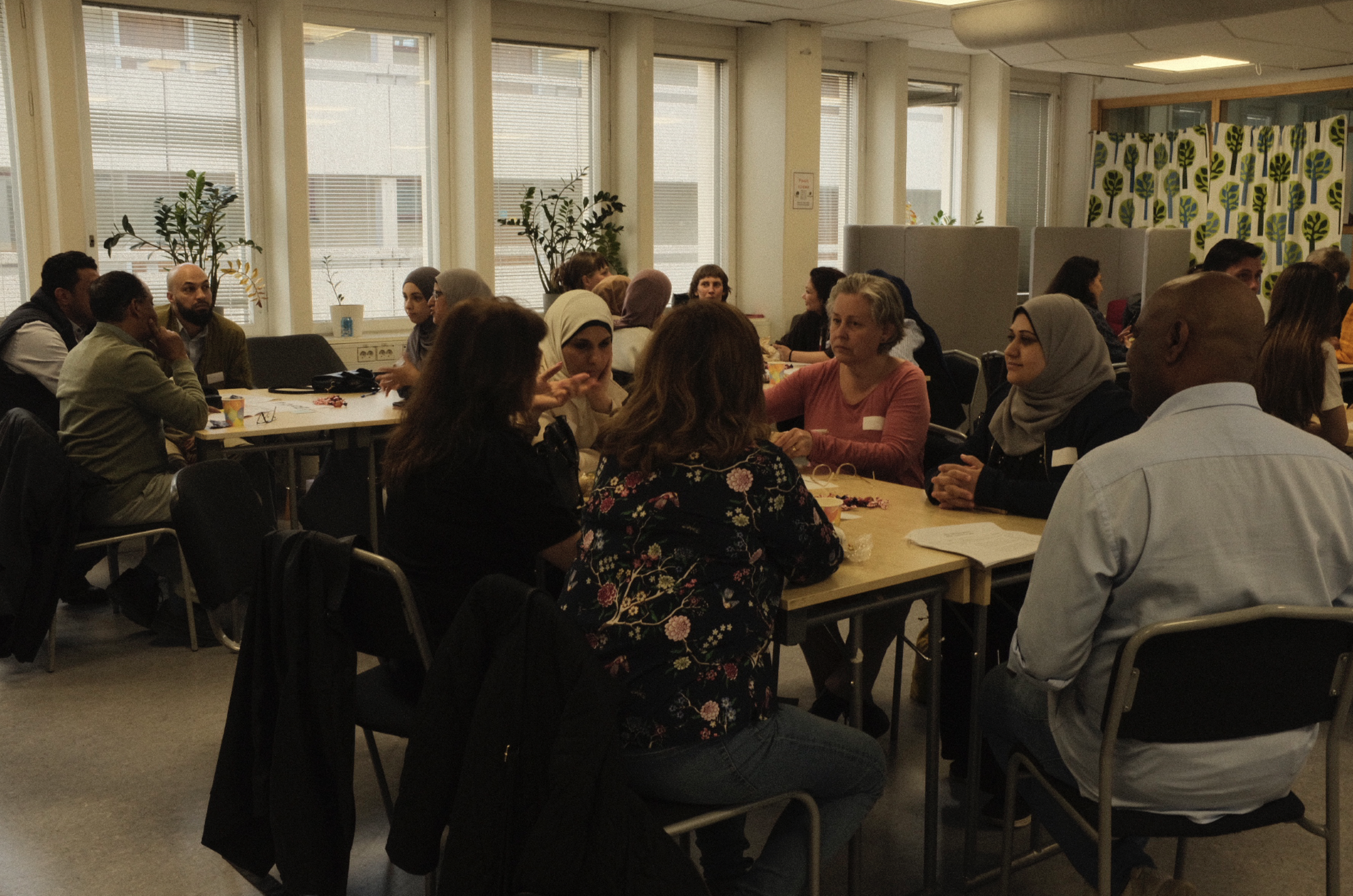
Study Action Skärholmens Discerning Assembly 2025.
Photo credit: NCCO.
What is Community Organising?
You might already be familiar with the idea of community organising. Organising has a long and proud history with roots in the suffragettes’ and civil rights’ movement, and has been used by countless groups wanting to achieve change. Because of this, there are a number of different organising traditions, and the specific method we use and teach at NCCO is called Broad-Based Community Organising.
Broad-Based Organising (or BBO, for short) is a method that places a central importance on identifying and developing civil society leaders, by equipping them with the tools and habits to build campaigns and negotiate with decision makers.
But most importantly, the method seeks to build alliances - not of individual people, but civil society organisations. Imagine schools, faith groups, charities, universities, trade unions, all coming together to act across differences and win the types of social change they wouldn’t be powerful enough to achieve on their own.
Broad-Based Community Organising was developed by Saul Alinsky, who set up the Industrial Areas Foundation. The IAF is still going strong today, and is known for its training programme which takes budding community leaders on residential training and equips them with the relationships and skills to build power and make change.
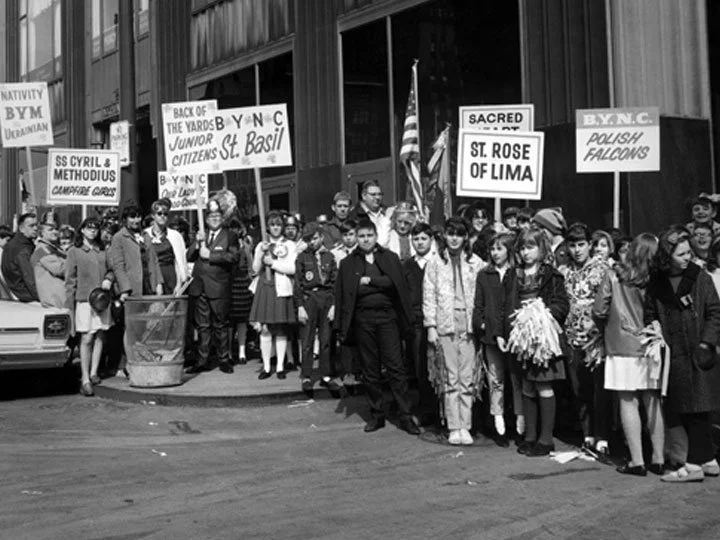
Back of the Yards Neighbourhood Council, founded in 1939 by - among others - Saul Alinsky. Photo credit: bync.org.
In the 1990s, a group of British civil society leaders went on the IAF’s training, and brought the method back to the UK. Slowly, over years and years, an organiser called Neil Jameson led the work of adapting the method to the British context to set up what is now known as Citizens UK.
35 years later, Citizens UK has alliances of over 500 civil society organisations in 16 cities across the UK, working together to make change on the issues that matter, from campaigning for zebra crossings on dangerous roads, to reforming the immigration system, to the Living Wage campaign.
It was here, at Citizens UK - the home of community organising in the UK - that our founders Mike and Frida was trained as Community Organisers. We are proud to have Citizens UK as partners in our endeavours with NCCO, and to continue the tradition and legacy of Broad-Based Community Organising.
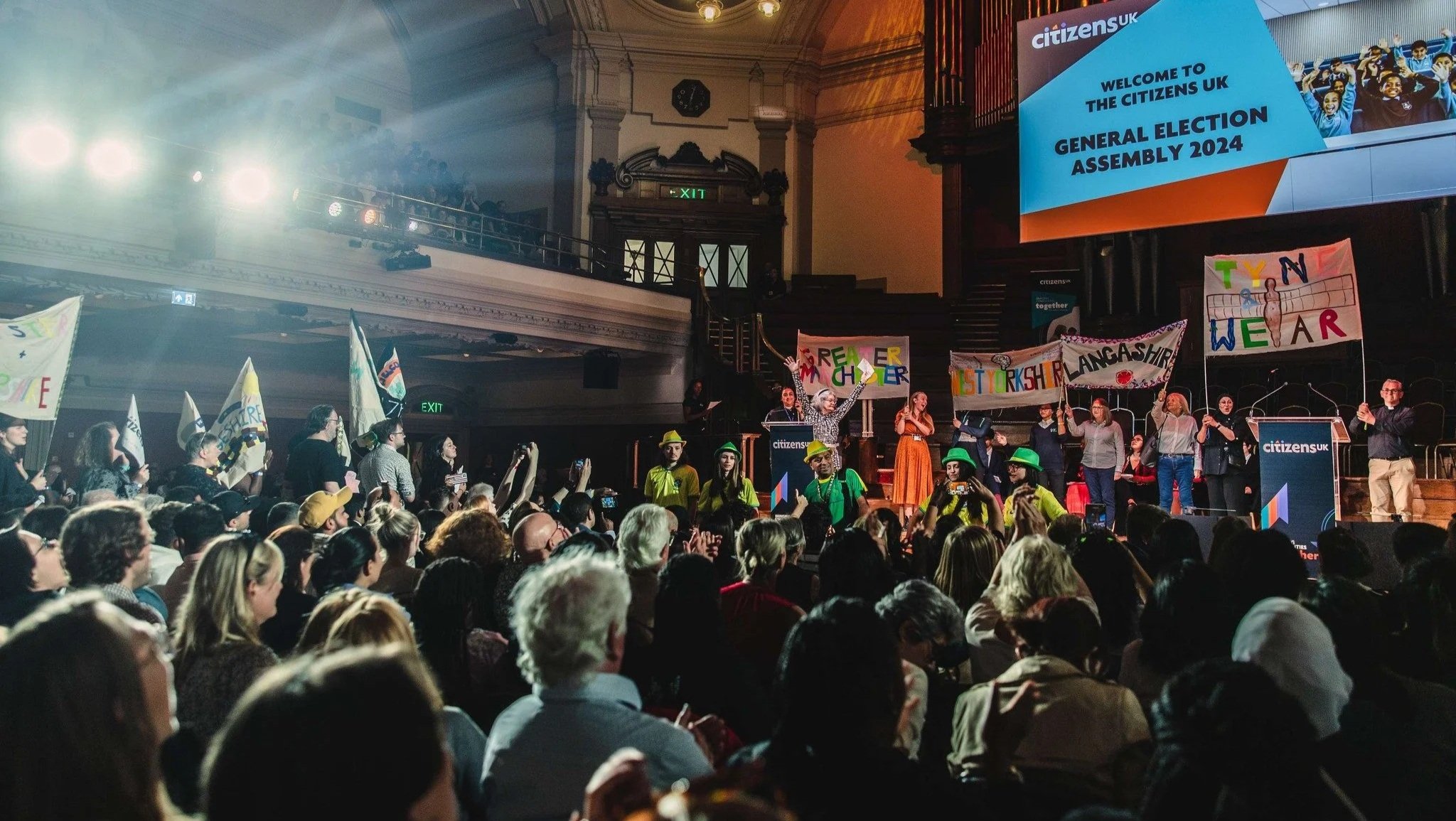
Citizens UK General Election Assembly 2024.
Photo credit: Citizens UK.